leave a message
If you are interested in our products and want to know more details,please leave a message here,we will reply you as soon as we can.


As global fiber optic networks rapidly expand to support the immense bandwidth requirements of 5G, FTTX broadband, and hyperscale cloud computing, managing fiber termination and complex routing has become a critical operational challenge for IT managers. The Optical Distribution Frame (ODF) serves as the central nervous system of your entire physical cable management infrastructure. Choosing the correct architecture directly dictates your facility's physical footprint, future network scalability, and ongoing maintenance efficiency. Whether you are upgrading an aging telecommunications room or deploying a brand new data center, understanding the structural and economic differences between standard and high-density architectures is essential. Below, we break down the core differences to help you select the most cost-effective and future-proof fiber management solution for your next massive deployment.
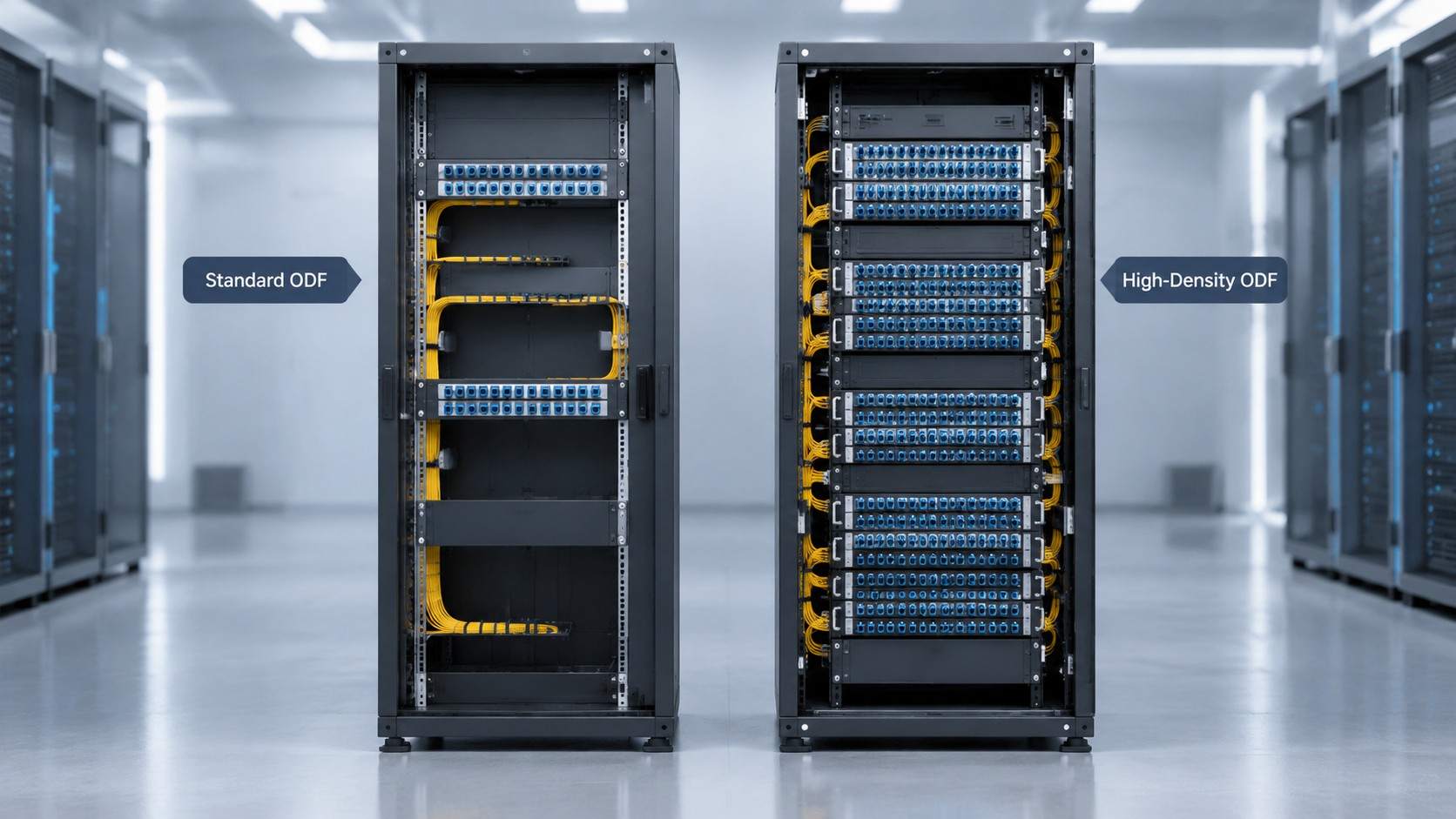
For decades, the traditional 19 inch rack mount ODF has been the undisputed industry standard for telecommunication rooms, enterprise local area networks (LAN), and older data centers. These systems typically utilize fixed or slide-out metal chassis equipped with internal splice trays.
In stark contrast, modern high-density ODFs are meticulously engineered for premium space optimization and rapid deployment. Instead of relying on time-consuming manual splicing in the field, they utilize factory-tested, pre-terminated MPO MTP ODF cassettes that simply snap directly into a specialized modular chassis.
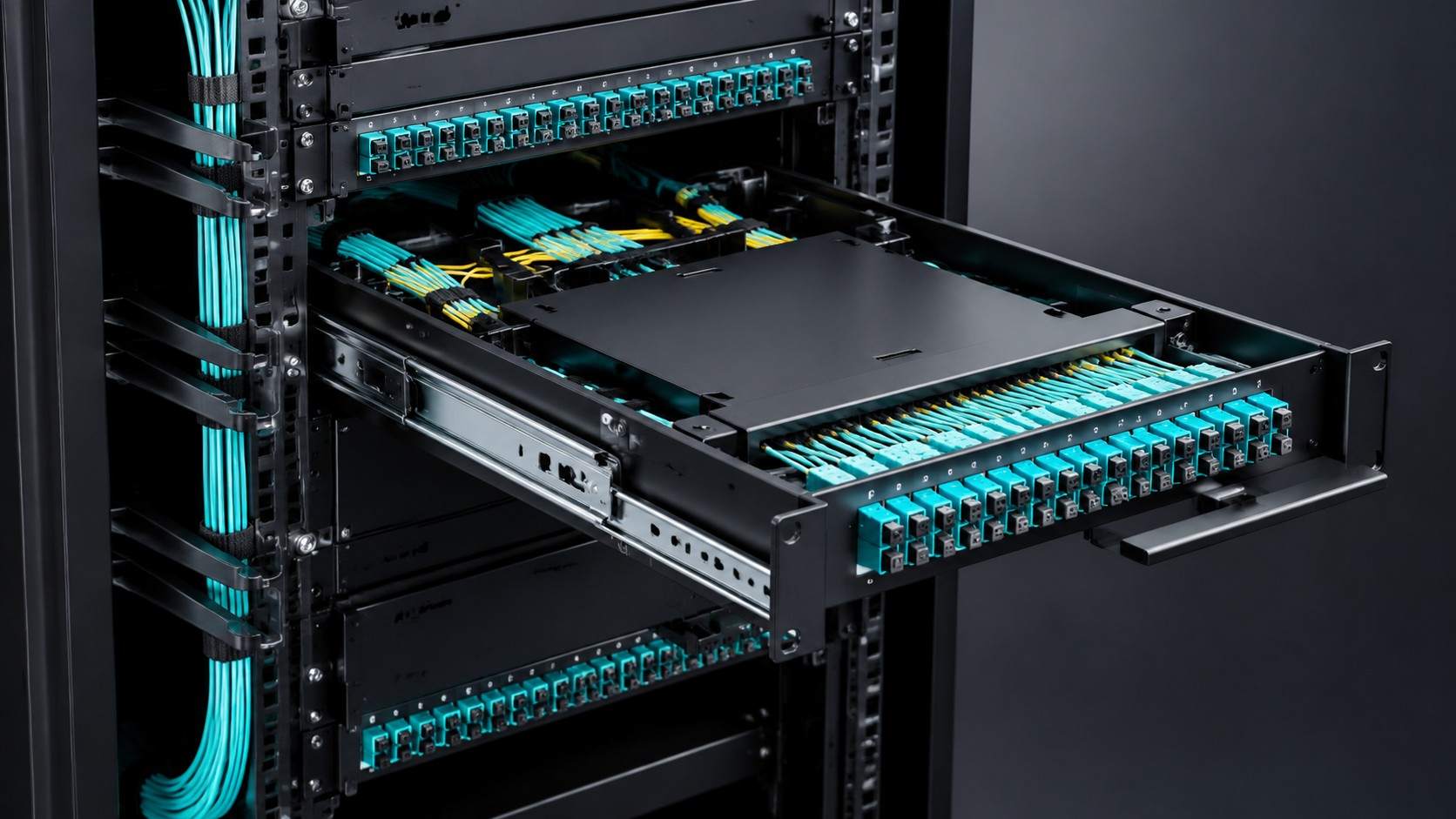
When evaluating total cost of ownership (TCO), network architects must look beyond the initial purchase price of the metal frame. In modern metropolitan data centers, floor space is an expensive premium. Deploying a high density optical distribution frame 144 core configuration allows you to double or triple your network capacity without purchasing additional server racks or expanding your cooling footprint. Furthermore, the modular design incorporates advanced cable management arms that prevent cable tangling and maintain proper bend radii, which drastically reduces the risk of signal degradation and minimizes expensive network downtime during routine maintenance or future upgrades.
| Key Feature | Traditional ODF | High Density ODF |
|---|---|---|
| Maximum Core Capacity (per 1U) | Up to 48 / 96 Fibers | 144 / 288 Fibers or more |
| Installation & Deployment Method | Manual field splicing required | Pre-terminated plug-and-play cassettes |
| Initial Equipment Hardware Cost | Lower upfront cost | Higher (but significantly saves on labor) |
| Long-term Maintenance & Scaling | Slower, higher risk of cable tangling | Fast modular swaps, pristine cable routing |
Final Verdict: If you are managing a small regional office network where server rack space is plentiful and labor costs are not a primary concern, a standard ODF remains a reliable and cost-effective workhorse. However, if your upcoming project involves hyperscale data center upgrades, cloud computing expansions, or dense FTTX core distributions, investing in a high-density modular ODF is the only guaranteed way to ensure your physical infrastructure will not bottleneck your future network growth.
Q1: Can I upgrade a standard ODF frame to a high-density system later without replacing the rack?
A: Generally, no. High-density systems rely on specialized modular chassis designed specifically to securely hold compact cassettes and manage ultra-dense cable routing. You would need to replace the chassis entirely, though it will still fit into a standard 19-inch telecom rack.
Q2: Does packing more fibers into a smaller space make it harder for technicians to perform maintenance?
A: Actually, modern high-density ODFs are easier to maintain. They feature tool-less, slide-out modular cassettes and advanced cable management arms that prevent cable pinching. This allows technicians easy access to individual ports without disturbing adjacent live connections.
Q3: Are these high-density chassis only compatible with MPO/MTP trunk cables?
A: While they are highly optimized for MPO/MTP backbone networks, many high-density frames offer versatile modularity. You can often swap out the front faceplates or internal cassettes to support standard LC Duplex or SC connections, providing excellent flexibility for mixed-use network architectures.
leave a message
Scan to Wechat :

Scan to WhatsApp :